|
|
|
|
|
HISTORY
PENNSYLVANIA STATE POLICE
|
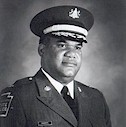 |
In August 1987, Deputy Commissioner Ronald Sharpe
was appointed Commissioner of the Pennsylvania State Police. Colonel Sharpe was the first African-American to be appointed to
that position in the history of the Department. Many new Department initiatives were implemented
under [his] direction:
View more
Pennsylvania State Police leadership |
Commissioner,
Colonel Ronald Sharpe |
|
|
|
• January 1988, the Department unveiled a new uniform, with a new shoulder
patch and shirt. The patch, designed by a seven member uniform committee, incorporated the
keystone and the state's coat of arms encircled by a star burst. The star burst was part of the
department's first uniform, designed by Major John Groom in 1905.
• January 1988, the first three of 15 Canine Drug Enforcement Teams
completed their initial training period and became operational. The canines and their trainers
respond to requests from state and local law enforcement agencies, schools, critical industries,
and appropriate public sector agencies.
• After a 50-year hiatus, the Department returned to
patrolling the state's highways on motorcycles. Twelve Harley Davidson motorcycles were assigned
to Bethlehem, Harrisburg, Philadelphia and Pittsburgh to respond to accidents along heavily
traveled highways. The program was designed to help restore traffic on major, densely traveled
highways, where conventional vehicles cannot respond quickly. The motorcycles were dedicated in
August 1989.
• The State Police responded to reports of a major
riot at the Camp Hill State Correctional Institution in October, 1989. About 800 Troopers were on
the scene during the peak of the riots with hundreds more en route to begin shift changes as the
riots continued for a three day period.
• The Department announced a senior level management
reorganization on in January 1990, with the creation of two new Deputy Commissioner positions and
the addition of a sixth Area Command. The new Table of Organization listed a Deputy Commissioner
of Administration, Deputy Commissioner of Operations, and Deputy Commissioner of Staff.
• In April 1990, Governor Robert P. Casey commissioned
50 Troopers as the first members of the new Tactical Narcotics Team (TNT). The team was assigned a
threefold mission: Interdict illegal drug shipments via bus stations, airports and rail terminals;
mount undercover investigations targeting street and midlevel dealers; and respond quickly to
drug enforcement opportunities. The force can respond anywhere in the state within 24 hours.
• The Automated Fingerprint Identification System (AFIS) also became
operational in 1990. The project utilizes computer technology to read, match, compare, and store
fingerprint images. Without AFIS, manual search of 1 million Fingerprint cards on file would take
about 65 years to complete. AFIS can accomplish the same task in about 30 minutes. The system is
available to all law enforcement agencies in Pennsylvania.
• Beginning in January 1991, a series of strategic planning conferences were
held which involved a diverse group of enlisted and civilian members of the Department. Their task
was to examine the present and future demands of the Department, assess current programs, and make
recommendations for long range planning.
• Troop Drills were reinstated for members in the
field. The Drills include inspection, marching, and drill formations.
The Pennsylvania State Police also played a crucial part in the
formation of the Pennsylvania Narcotics Officer Association. Captain Paul J. Evanko of the
Pennsylvania State Police was named as president.
In June 1992, two new Bureaus were created to better meet community needs and law
enforcement challenges. The Bureau of Drug Law Enforcement provided a united and coordinated front
in enforcing drug laws. The Bureau of Emergency and Special Operations, consolidated the functions
of Aviation, Executive Protection, Special Emergency Response Team, Canines and Underwater Search
and Recovery.
The First law enforcement DNA testing laboratory opened in Greensburg on September 22,
1992. DNA analysis can be 100 times more definitive in identifying a subject than traditional
tests of blood or body fluids. DNA helps link suspects to crimes and helps exonerate individuals
wrongly accused of serious crimes.
The State Police unveiled its airborne thermal imaging system on Nov. 15, 1993. The system
will bolster State Police search, surveillance, apprehension and rescue capability. The infrared
sensors, which are mounted on the bottom of State Police helicopters, detect heat that is radiated
from the outside surface of a person or object. Officers view the heat contrasted images on a
video monitor in their aircraft. While the devices cannot see into or through structures, they are
useful in helping officers spot subjects in all light conditions especially at night.
In April. 1993, Commissioner Glenn A. Walp established 34 fulltime community service officers
throughout the state. The officers establish a working and open relationship with citizens, the
local police. Community organizations, municipal leaders and school officials; provide drug
education and traffic safety programs for area citizens; assist in the development and maintenance
of programs such as Neighborhood Crime Watch, Victim/Witness Assistance, Utility Watch,
HugABear, Gifts for Kids. Camp Cadet and Crime Stoppers; and act as the troop public
information specialists on major Troop/Area State Police activities and emergencies.
In 1993, the department purchased 4,500 new semiautomatic weapons. It had been the more than a
decade since the last purchase of new weapons. The 40 Caliber Beretta has more firepower and is
expected to improve the safety and effectiveness of State Police officers.
On July 31, 1993, The Pennsylvania State Police became the largest accredited police agency in the
world. In order to gain accredited status from the Commission on Accreditation for Law Enforcement
Agencies, the department had to comply with 733 professional police standards.
In 1993, the department purchased 4,500 new semiautomatic weapons. It had been the more
than a decade since the last purchase of new weapons. The 40 Caliber Beretta has more firepower
and is expected to improve the safety and effectiveness of State Police officers.
On July 31, 1993, The Pennsylvania State Police became the largest accredited police agency in the
world. In order to gain accredited status from the Commission on Accreditation for Law Enforcement
Agencies, the department had to comply with 733 professional police standards.
|
|
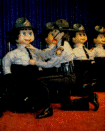 |
| In February, 1994, the department
purchased 15 Trooper Robots to bolster State Police educational programs for young children. The four
foot tall robots, which are dressed as Troopers, weigh 80 pounds. Their voice, heads, eyes, lips,
arms. hands and mobility are controlled by wireless remote control.
|
|
In December of 1994, Maj. Virginia Smith-Elliott became
the first woman promoted to
the rank of major. She serves as the department's Affirmative
Action Officer.
In May of 1995, the Department contracted with KPMG-Peat Marwick LLP (KPMG) to
perform an
enterprise-wide evaluation of the Department's business processes and to develop an
information technology strategic plan. This meeting launched the
Department's Automation
Project. On June 30, 1996, KPMG delivered to the State Police
and the Executive Information
Technology Steering Committee an information technology strategic plan which was presented and
accepted by the Department. In September of 1996, the Department issued a request for proposal
for the implementation of the
Enterprise Network, which was the first priority listed in the
information technology strategic plan. In July of 1997, a preliminary award was given to IBM
Corporation for
the implementation of the enterprise network for the Department. On November
29,
1997, the Bureau of Technology Services was formed, from the former Information
Systems
Division of the Bureau of Records and Information Services, to support the
growing technology
needs of the Department. On June 11, 1998, a contract was put
in place between the
Pennsylvania State Police and IBM Corporation for implementation
of the Enterprise Network
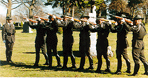
State Police Ceremonial Unit
|
| In August
of 1995, the Department formed a Ceremonial Unit to standardize the response and appearance of members
at funerals and parades. The Ceremonial Unit consists of a Color Guard, Casket Team, and a Firing
Detail. The Unit provides services at the funeral of a deceased active member or a deceased retired
member. In addition, the Color Guard will respond to requests for appearances at parades and
ceremonies. |
|
In April of 1996, State Police Commissioner Paul J.
Evanko authorized the use of video cameras in patrol cars. The cameras provide additional
documentation of patrol stops.
The department initially equipped 66 marked patrol cars with
the video cameras.
On July 12, 1996, the Troop B, Pittsburgh Station was closed.
On May 12, 1997, the 100th Cadet Class graduated 129 new Troopers from the
Academy in Hershey.
In February 1997, the Department acquired the Integrated Ballistics Identification
System
(IBIS) through the use of federal grant monies and the assistance of the
Bureau of Alcohol,
Tobacco, and Firearms. IBIS analyzes bullets and cartridge cases
and can compare every
firearm, bullet, and cartridge case to each other, and against
the bullets and cartridge cases
previously entered into the database. IBIS is able to compare "electronic exhibits"
from any location utilizing IBIS technology. On May 17,
1997, Area V was realigned by
consolidating the interstate troop, Troop S, with and
into adjacent county Troop Commands. In
early 1997, a Cadet Qualifying Examination
was developed and approved by an expert panel as
valid, job-related and non-discriminatory.
On September 10 and 11, 1997, the Cadet examination was administered and a joint
motion was
submitted to the court for dissolution of the Consent Decree.
On July 1, 1997, the Department ceased its participation in the Attorney General's
regional
Drug Strike Forces. Tactical Narcotic Teams were organized at the Troop level
to work with
Troop Vice Units for a more coordinated effort towards intelligence
gathering, surveillance,
undercover operations, and interdiction.
In October 1997, 15 specially equipped, all-wheel-drive vans were distributed to the Troops.
One Forensic Unit van was assigned to each Troop to be utilized by the Identification Unit
when responding to crime and accident scenes. Each van is equipped with police light-bars, an
elevated platform, roof-mounted spotlights, cell phone, storage compartments, and a folding
ladder. The vans carry specialized investigative equipment, including cameras, metal
detectors, forensic light sources, electrostatic dust print lifters, fingerprint processing
equipment, and evidence vacuums.
On January 1, 1998, the Pennsylvania Department of Transportation (PennDOT)
assumed
responsibility for the administrative supervision of Safety/Emissions Inspection Stations and
motor vehicle dealers, thus relieving the Department of the responsibility
of Official
Inspection Station regulatory functions.
On February 12, 1998, the inspection of underground storage tanks, pumps, and related devices
was transferred from the Pennsylvania State Police to the Department of Labor
and Industry.
General history after 1998 is a work in progress...
Full list of PSP Commissioners/Superintendents
Superintendents of The
Pennsylvania State Police
- John C. Groome...........Appointed - July 1, 1905
- George F. Lumb...........Appointed - June 3, 1919
- Lynn G. Adams............Appointed - March 1, 1920
Superintendents of The Pennsylvania
State Highway Patrol
- Wilson C. Price...........................Appointed May 18, 1923
- Deputy Supt. Philip J. Dorr...........(Acting) February 29, 1936
- Lt. Earl J. Henry.........................(Acting) March 16, 1936
- Charles H. Quarles......................Appointed April 13, 1936
- Lt. Earl J. Henry.........................(Acting) February 28, 1937
Commissioners of The Pennsylvania
Motor Police
- Col. Percy W. Foote.............................Appointed June 29, 1937
- Lt. Col. Cecil M. Wilhelm........................Appointed January 25, 1939
- Col. Lynn G. Adams..............................Appointed May 31, 1939
- Col. Cecil M. Wilhelm............................Appointed January 20, 1943
Commissioners of The Pennsylvania
State Police
|
• |
Col. Cecil M. Wilhelm |
.......................... |
Appointed June 1, 1943 |
|
• |
Col. Earl J. Henry |
.......................... |
Appointed March 28, 1955 |
|
• |
Col. Frank G. McCartney |
.......................... |
Appointed February 26, 1959 |
|
• |
Col. E. Wilson Purdy |
.......................... |
Appointed January 29, 1963 |
|
• |
Lt. Col. Paul A.
Rittelmann |
.......................... |
(Acting) April 8, 1966 |
|
• |
Col. Frank Mcketta |
.......................... |
Appointed January 17, 1967 |
|
• |
Col. Rocco P. Urella |
.......................... |
Appointed January 25, 1971 |
|
• |
Col. James D. Barger |
.......................... |
Appointed January 2,
1973 |
|
• |
Col. Paul J. Chylak |
.......................... |
Appointed February
15, 1977 |
|
• |
Col. Daniel F. Dunn |
(Died in office)...... |
Appointed March
1, 1979 |
|
• |
Lt. Col.Cyril J. Laffey |
.......................... |
(Acting) May 16, 1984 |
|
• |
Lt. Col. Nicholas
Dellarciprete |
.......................... |
(Acting) December 1, 1984 |
|
• |
Col. Jay Cochran, Jr. |
.......................... |
Appointed
March 6, 1985 |
|
• |
Col. John K. Schafer |
(Died in office)....... |
Appointed January 30, 1987 |
|
• |
Col. Ronald M. Sharpe |
.......................... |
Appointed August 3, 1987 |
|
• |
Col. Glenn A. Walp |
.......................... |
Appointed
April 23, 1991 |
|
• |
Maj. James B. Hazen |
.......................... |
(Acting) January 17, 1995 |
|
• |
Col. Paul J. Evanko |
.......................... |
Appointed
February 15, 1995 |
|
• |
Col. Jeffrey B. Miller |
.......................... |
Appointed
March 24, 2003 |
|
• |
Col. Frank E.
Pawlowski |
.......................... |
Appointed
October 2008 |
|
• |
Col. Frank
Noonan |
.......................... |
Appointed January
2011 |
|
• |
Col. Tyree Blocker |
.......................... |
Appointed December.
2015 |
|
• |
Col. Robert
Evanchick |
.......................... |
Appointed June
2019 |
| |
|
|
|
|
|
|
|
|
|
View
more on Pennsylvania State Police leadership |
|
|
|
|
|
|
|
PSP- HEMC™
is a Non-Profit Organization Committed to Collecting,
Preserving and
Exhibiting Significant Historical Documents and
Artifacts of the Pennsylvania State Police. |
|
|
|
|
|
|
|
|
|